
The internet in 2026 is drowning in AI content. Blogs, landing pages, product descriptions, even comments—AI is everywhere. Tools are faster, cheaper, and honestly, pretty good at stringing words together. But here’s the question that actually matters: does AI content rank on Google? Short answer: yes. Longer answer: yes… but not in the way most people imagine.
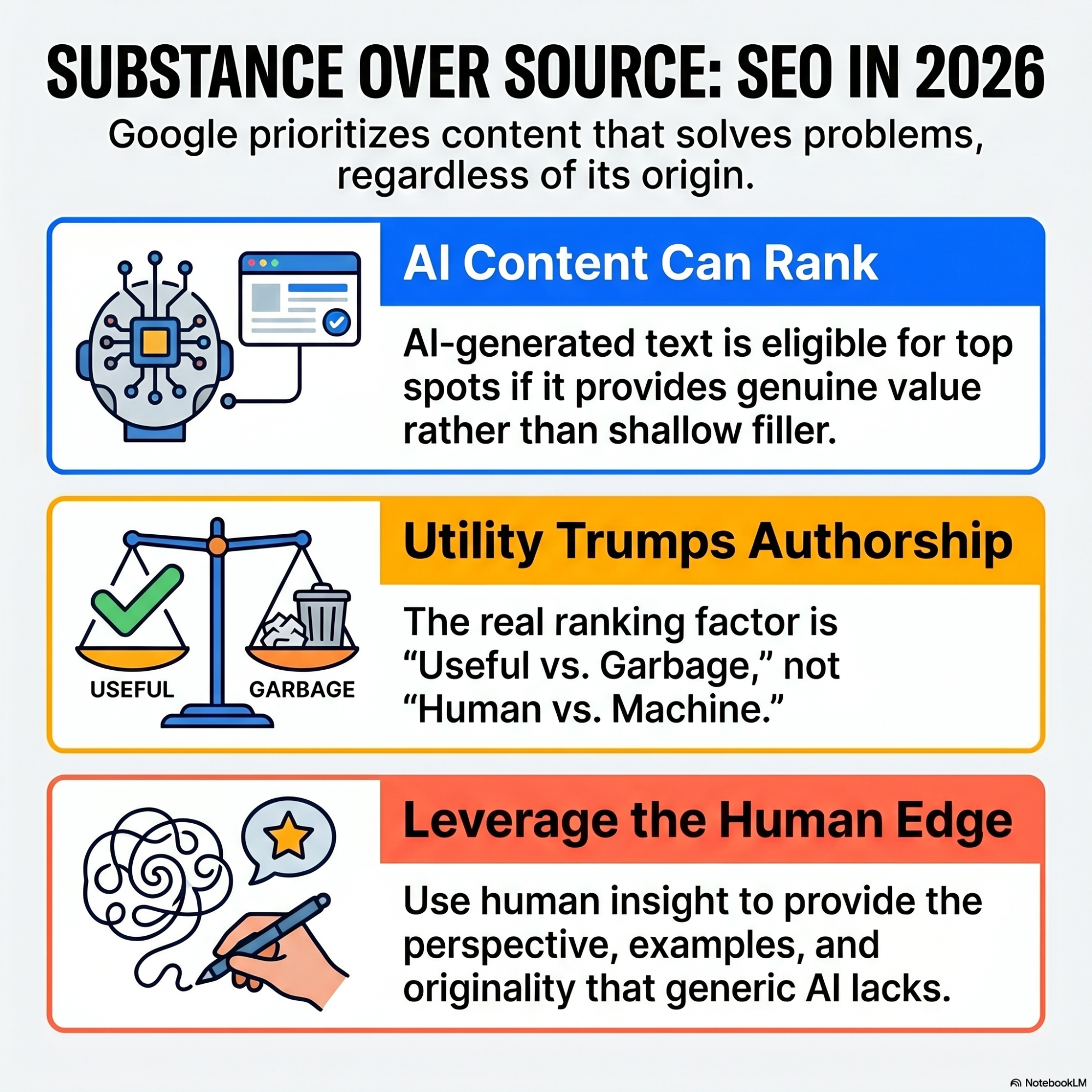
The truth is, the real battle is not AI versus humans—it’s useful content versus garbage content. Google has become really good at spotting the difference. AI can generate content quickly, but if it’s shallow, repetitive, or lacking insight, it won’t stick in search results. Human writers still have the edge when they add perspective, examples, and originality, but the winner is always content that actually solves problems and engages readers—human, AI, or a mix of both.
What Is AI Content?
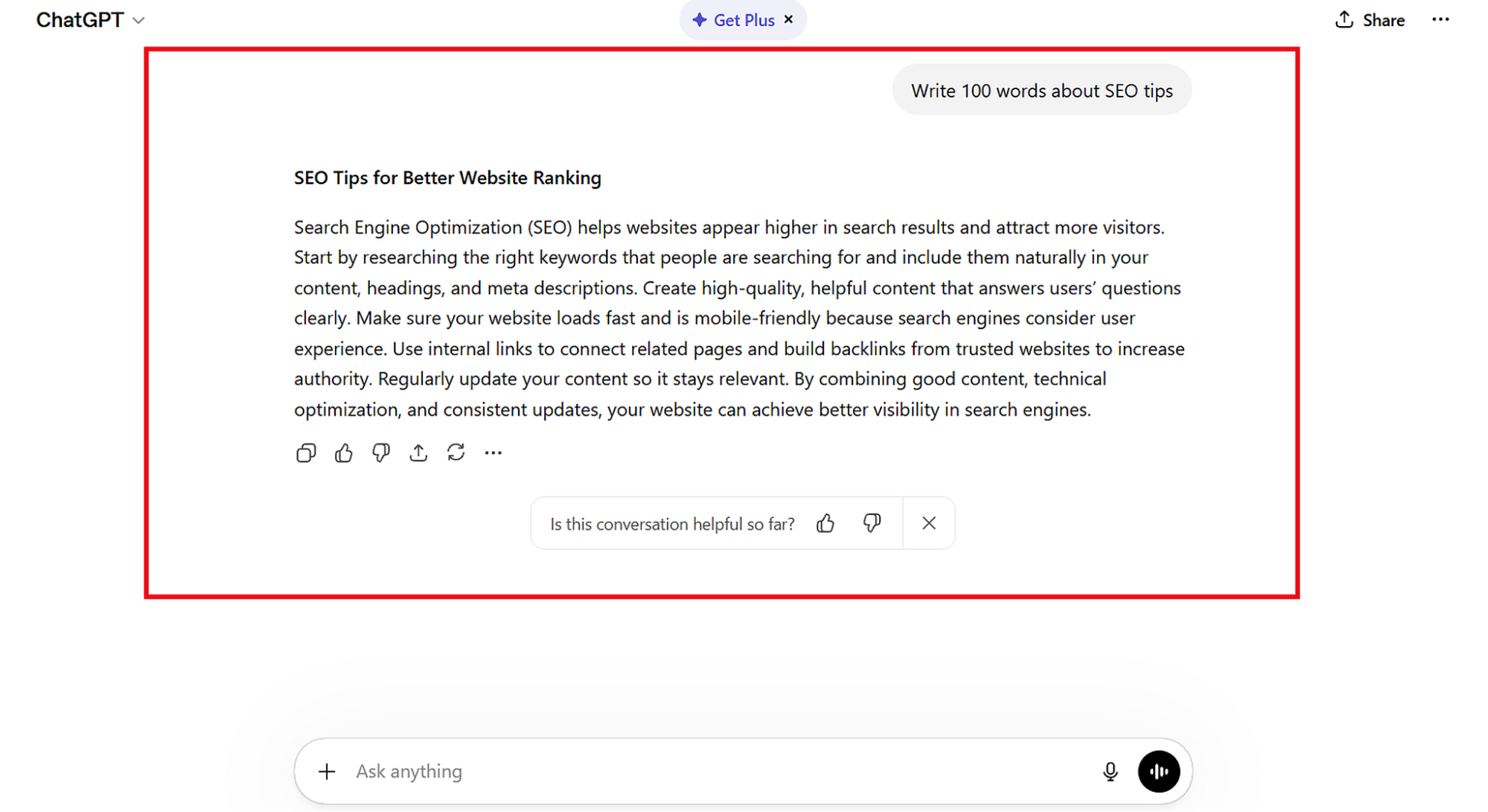
AI content is any text generated by artificial intelligence tools rather than a human. Think of platforms like ChatGPT, Jasper, or Writesonic—they can produce articles, product descriptions, or even social media posts automatically. The goal of AI content is usually speed and efficiency: you give it a prompt, and it spits out words that make sense, are grammatically correct, and often optimized for SEO. But here’s the thing—most AI content lacks personal experience, perspective, or real insight. It’s mostly a remix of information already online, rearranged to sound fresh. That’s why some of it can feel a bit “safe” or generic. AI content is great for drafts, outlines, or research summaries, but by itself, it doesn’t always create material that engages readers deeply.
What Is Human-Written Content?
Human-written content, on the other hand, comes from actual people typing, thinking, and adding their unique experiences or viewpoints. It can be messy sometimes—sentences might run long, ideas jump around, or the writer may include personal anecdotes—but that’s exactly what gives it personality and authenticity. Human content often explores nuances that AI can’t fully understand, like tone, humor, or subtle context in certain industries. It’s slower to produce than AI content, but it tends to offer more depth, emotion, and originality, which Google rewards over time.

Feature / Aspect | AI Content | Human-Written Content |
Speed of Creation | Super fast, can generate dozens of articles in minutes | Slower, requires thinking, researching, and editing |
Originality | Often repeats or rephrases existing information | Offers unique perspectives, opinions, and insights |
Tone & Personality | Polished, predictable, sometimes flat | Messy, authentic, and full of personality |
Depth & Context | Usually surface-level, lacks nuance | Explores details, context, and subtle points |
Engagement | Can struggle to capture reader attention | Better at keeping readers interested and involved |
Error Pattern | Few grammatical errors, very “clean” | Occasional typos or grammar quirks, but natural |
SEO Potential | Can rank if structured and optimized | Often ranks better long-term due to depth and authenticity |
Best Use | Drafts, outlines, content scaling | Authority articles, storytelling, insight-driven posts |
AI Content vs Human Content: What’s Really Happening in 2026
A few years ago, many people believed Google would start banning AI-written content. Bloggers and marketers were worried that machine-generated articles would be penalized or removed from search results. But that never really happened. The truth is, Google doesn’t focus on whether content is written by a human or AI. What it actually evaluates are deeper signals—how helpful the content is, whether it shows expertise, and if it provides original value to readers.
In 2026, Google’s ranking systems look closely at factors like usefulness, engagement, and topical authority. AI can produce content very quickly, but speed doesn’t always mean quality. A lot of AI-generated articles simply rewrite information that already exists online, without adding real experience or fresh insight. Over time, Google can recognize that pattern, and those pages often drop in rankings. So the real issue isn’t AI vs human content—it’s whether the content is genuinely valuable or just another generic piece on the internet.
Does AI Content Rank on Google?
Yeah — it does. But only when it actually deserves to rank. Google doesn’t really care if a human wrote it or a tool helped create it. What matters more is whether the content is helpful, clear, and solves a real search problem for someone. That’s basically what Google has been repeating in its quality guidelines for a while now, even if people still debate it online.
But in real life, things get a bit messy. A lot of AI content gets published thinking it will automatically rank just because it’s “SEO optimized.” That rarely works long-term. Some pages do get initial impressions or even rankings for a short time, then slowly drop when Google re-evaluates quality signals. It’s not instant punishment, more like a slow filtering out process that happens quietly in the background.
Real Word Example :-
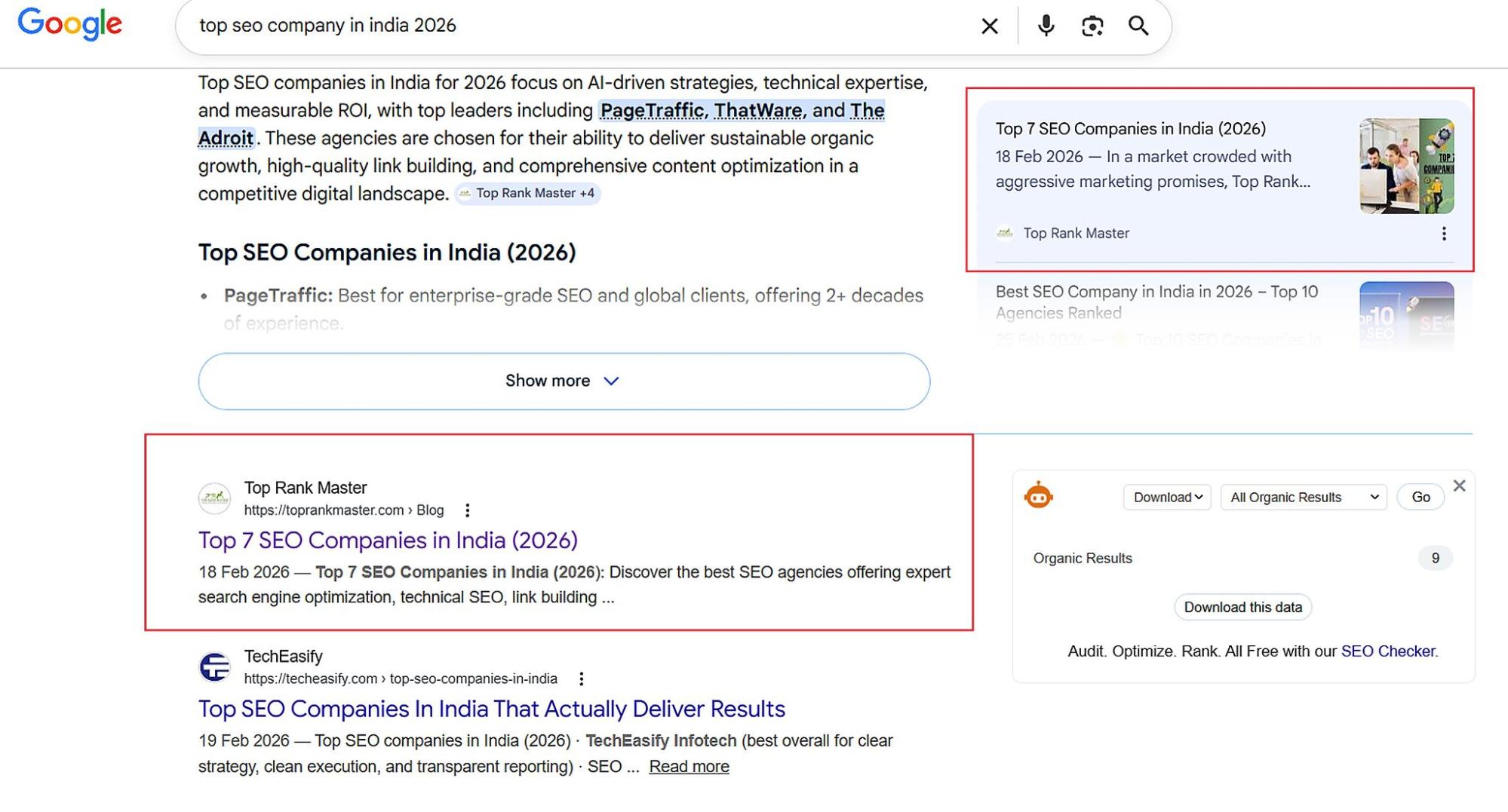
Our blog about the “Top 7 SEO Companies in India in 2026” was generated with the help of an advanced AI tool. After publishing, the article successfully ranked on the first page of Google in the top position. This example clearly demonstrates that Google primarily evaluates the quality, relevance, and usefulness of content, rather than focusing on whether it was created by a human or generated using artificial intelligence. As long as the content provides accurate information, satisfies user intent, and offers real value to readers, it has the potential to rank well in search results.
In addition, the article was also featured in Google’s AI Overview, which has become an increasingly important element in modern search results. Appearing in AI Overview indicates that the content is considered reliable, relevant, and valuable enough for Google’s AI systems to summarize and present directly to users.
Content Ranking Factors in 2026 (What Google Actually Measures)
Search engines in 2026 don’t work the way they did even five years ago. A lot of people still think ranking is about stuffing keywords, building a few backlinks, and waiting. That approach barely moves the needle anymore.
Google’s systems today are built around understanding content quality, user satisfaction, and real authority signals. It measures how helpful your page is for an actual human being, not just whether a keyword appears ten times.
So if you’re trying to rank content in 2026, you need to understand what Google is actually measuring behind the scenes. Some of these factors are obvious. Others are a bit subtle and often missed.
Let’s walk through the real ones.
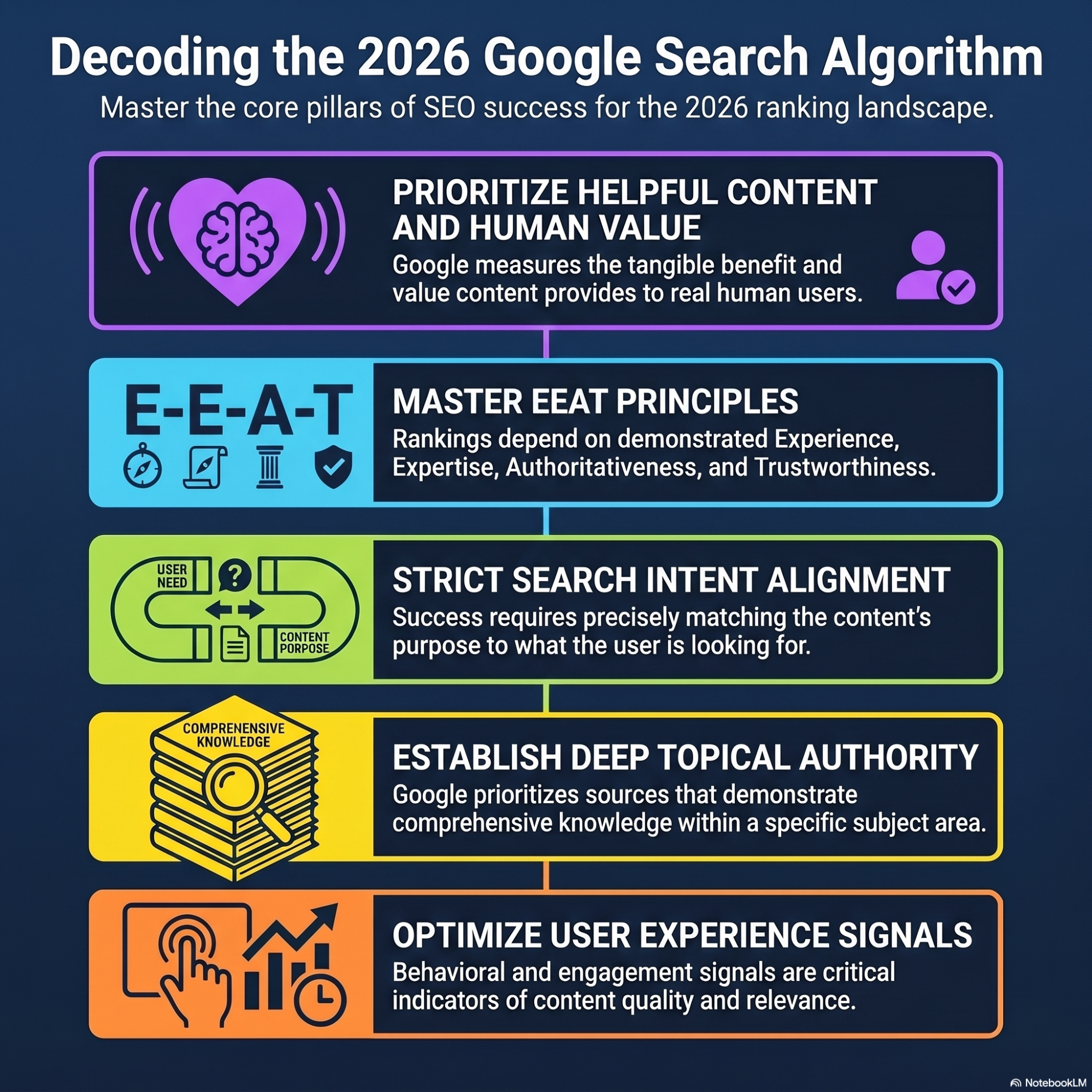
1. Helpful Content & Human Value
One of the biggest shifts in recent years came from Google’s Helpful Content System. This system tries to determine whether a page was created primarily to help users… or simply to rank.
Google analyzes signals like depth, clarity, and whether the article truly answers the search query.
Pages that repeat information already available everywhere else tend to struggle. Meanwhile, content that adds something new — insight, explanation, examples, experience — usually performs better.
There’s also a noticeable pattern: pages that feel written by someone who understands the topic tend to stick on page one longer.
Thin AI-generated articles that haven’t been edited, expanded, or fact-checked often lose visibility after updates. They might rank briefly, but they rarely stay there.
The key thing Google seems to measure here is simple:
Did this page actually help the searcher?
If the answer is yes, rankings follow.
2.Search Intent Alignment
Ranking well isn’t just about matching a keyword. It’s about matching intent.
When someone searches for something like “best MBA universities in Delhi”.
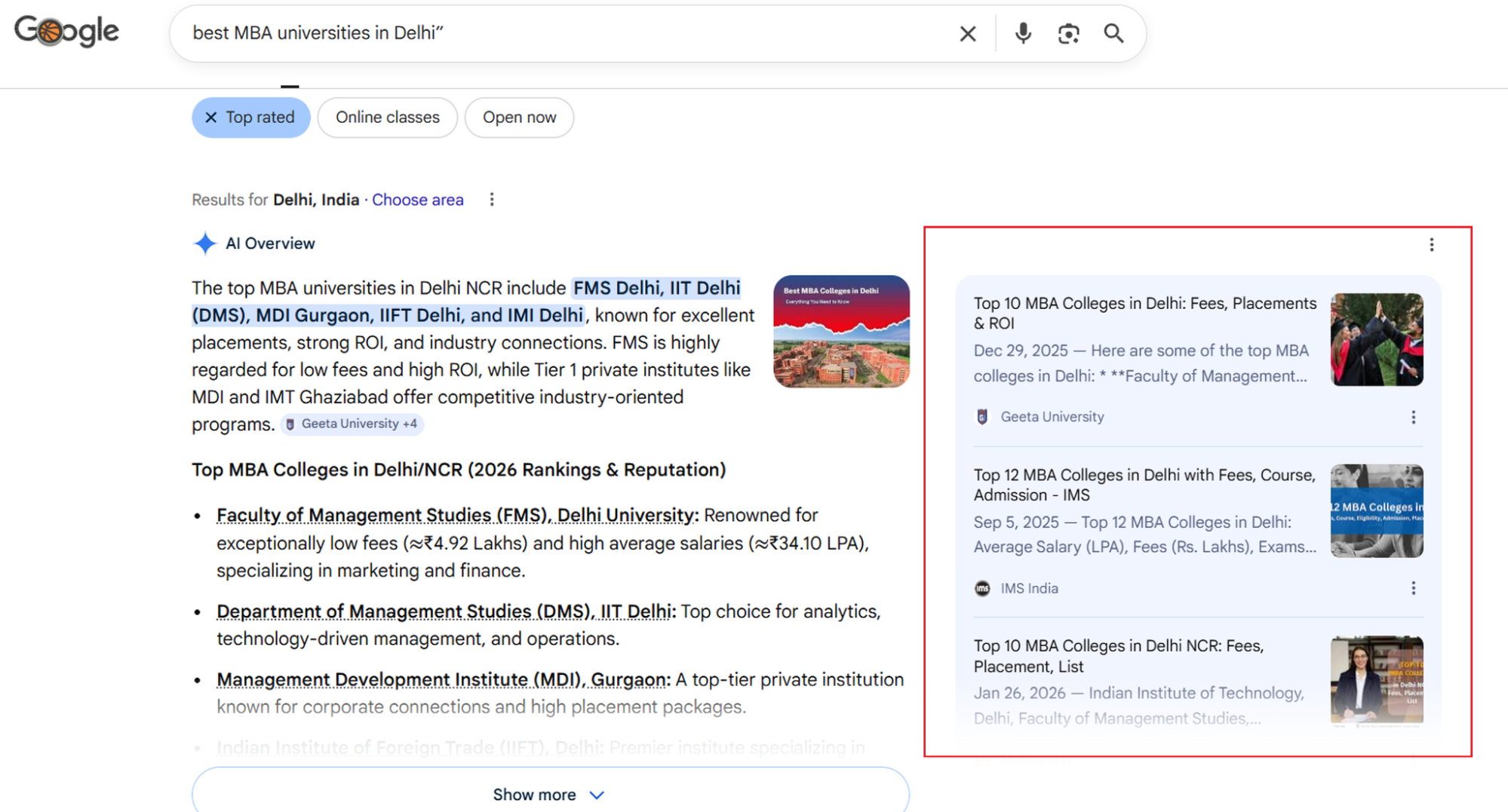
So user will click on these links for some data according to their requirement . They expect a list, maybe comparisons, maybe admission details. If your page is just a generic definition of an MBA… it won’t satisfy that intent.
Google studies user behavior after they click a result. If people quickly return to search results and choose another page, that’s a sign the first result didn’t satisfy the need.
Content that aligns with intent tends to include:
- Direct answers early in the article
- Clear explanations of the topic
- Supporting information that expands the answer naturally
Sometimes the simplest content wins because it answers the question faster.Intent matching has quietly become one of the most important ranking signals.
Why It Matters (SEO Point)
When users spend more time on your page:
- Your engagement increases
- Your time-on-site improves
- Google understands your content is helpful
3. Topical Authority
Publishing one article about a subject usually isn’t enough anymore. Google looks for signals that your website understands a topic deeply.
This is where topical authority comes in.
If a website publishes multiple interconnected articles around the same subject — for example SEO, Google algorithms, keyword research, and technical optimization — Google starts recognizing that site as a topic resource.
Internal linking strengthens this understanding. Articles referencing each other help Google map relationships between topics.
You’ll notice that high-ranking websites rarely publish random content. Instead, they build clusters of related articles that support each other.
Over time, that signals expertise.
4. EEAT (Experience, Expertise, Authority, Trust)
Google’s quality raters follow a framework called EEAT — Experience, Expertise, Authority, and Trust.
Even though it’s not a single algorithmic score, it strongly influences how Google evaluates content.
Pages that demonstrate real experience tend to perform better. For example, someone writing about SEO who shares real campaign results or case studies usually builds stronger credibility than a generic explanation article.
Expertise comes through clear explanations and accurate information.
Authority often comes from recognition — mentions, citations, backlinks from trusted websites.
And trust… well, that’s built through transparency. Author profiles, references, accurate information, and secure websites all contribute.
Google wants to understand who is behind the content and why they should be trusted.
5. Content Depth & Coverage
Google’s natural language systems now evaluate how thoroughly a topic is covered.
Pages that address related subtopics, common questions, and supporting details tend to perform better than extremely short pages.
But depth doesn’t mean writing thousands of words for no reason.
Sometimes a 900-word article answers a query better than a 3,000-word article filled with fluff. The goal is complete coverage of the search problem, not word count.
Good content usually includes:
- Clear explanations
- Supporting examples
- Related subtopics
- Frequently asked questions
When Google sees a page covering the topic naturally, it understands that page as a comprehensive answer.
6. User Experience Signals
Another factor quietly influencing rankings is user experience.
Google measures how easy it is for users to interact with a page. If a website loads slowly, has intrusive ads, or is difficult to navigate on mobile devices, users leave quickly.
That behavior becomes a signal.
Important experience factors include page speed, mobile usability, layout stability, and clear readability.
These are often measured through Core Web Vitals, which track loading performance, visual stability, and responsiveness.
Pages that are clean, readable, and fast generally perform better over time.
7. Backlinks & Authority Signals
Backlinks are still a ranking factor, but the way Google evaluates them has changed.
It’s no longer about quantity. One strong link from a trusted site can be worth more than dozens of weak ones.
Google looks at things like:
- Relevance of the linking site
- Trustworthiness of the domain
- Context of the link within the content
Natural editorial links remain powerful signals because they indicate that other websites consider your content valuable.
However, artificial link schemes are much easier for Google to detect today.
Quality always beats volume.
8. Freshness & Content Updates
Some queries require fresh information. For example, technology updates, SEO strategies, or industry trends change frequently.
Google’s freshness systems detect whether updated information would improve search results.
Pages that are regularly updated with new insights often maintain rankings longer.
Updating content doesn’t mean changing a few words. It means adding new sections, new data, or improved explanations.
Google recognizes meaningful updates.
9. Engagement & Behavioral Signals
While Google rarely confirms behavioral metrics directly, there are strong indications that user engagement matters.
Signals like:
- Time spent on a page
- Scrolling behavior
- Interaction with content
…help search systems estimate whether users found value in the page.
Content that keeps readers engaged naturally performs better. This usually happens when the writing feels natural, clear, and genuinely informative.
Overly robotic articles tend to lose readers quickly.
And that difference shows up in ranking performance.
10. Structured Data & Semantic Understanding
Search engines today rely heavily on structured understanding of content.
Using schema markup helps Google interpret information about articles, products, authors, and FAQs.
This doesn’t directly boost rankings by itself, but it helps Google understand context more accurately.
Better understanding often leads to improved visibility in rich results like featured snippets or knowledge panels.
Structured data is basically a translation layer between your content and Google’s systems.
In 2026, the debate is no longer AI vs Human content it’s about valuable content vs low-quality content. AI tools have made content creation faster than ever, but rankings still depend on usefulness, originality, experience, and user satisfaction. The websites winning today are those combining AI efficiency with human expertise, real insights, and strategic SEO execution.
At Top Rank Master, we focus on exactly that approach blending advanced AI tools with over a decade of real SEO experience to create content that not only ranks but also builds authority and long-term organic growth. Because in modern SEO, success comes from strategy, not just content production.

I am Harjinder Singh, Founder & Coach at Top Rank Master with 11+ years of digital marketing experience. I have worked with leading agencies and helped scale multiple brands through SEO, PPC, and performance marketing.
I run Top Rank Master, where I train students and professionals through practical, industry-focused coaching with 100% placement support. I am passionate about helping college students start strong careers and guiding agencies to achieve measurable growth.
Let’s connect if you want to learn digital marketing or grow your business.