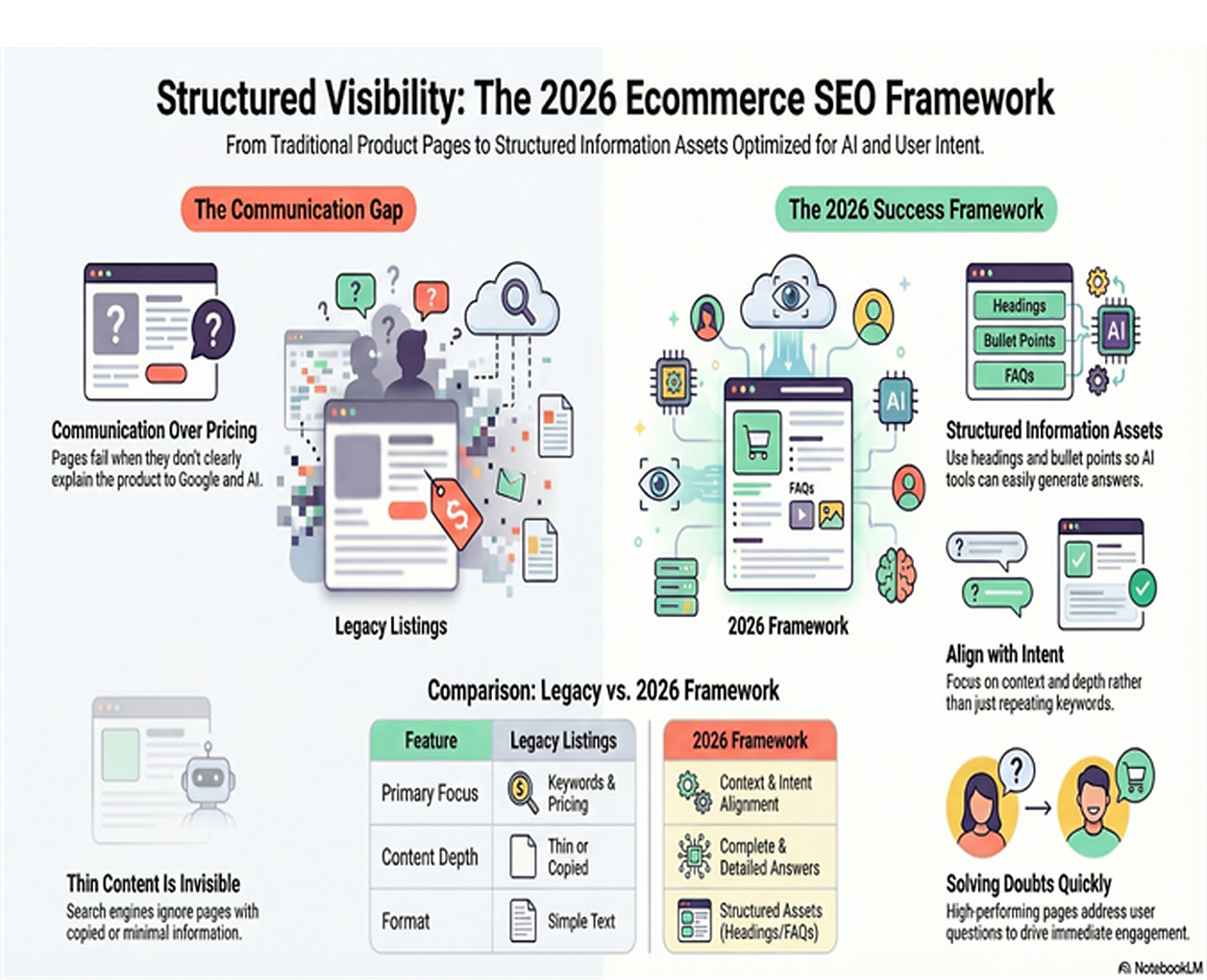
Most ecommerce product pages don’t fail because of design or pricing. The real problem is communication. They don’t clearly explain the product to Google, to AI systems, or to the buyer.
In 2026, a product page is no longer just a simple listing; it works like a structured information asset that search engines and AI tools read, analyze, and use to generate answers. Here’s the clear breakdown: pages with thin or copied content usually get ignored, while pages with detailed explanations, FAQs, and clear structure perform better. Google now focuses on context and intent, not just keywords. AI tools prefer pages that have organized content (headings, bullet points, direct answers). Users engage more with pages that solve their doubts quickly. So the shift is simple
Ranking today depends on clarity (easy to understand content), depth (complete information), and intent alignment (matching what the user is looking for). And this is exactly where ecommerce SEO consultants work—they turn basic product pages into structured, informative, and decision-focused assets that both users and AI can easily understand.
What Changed in 2026 (Google + AI Shift)
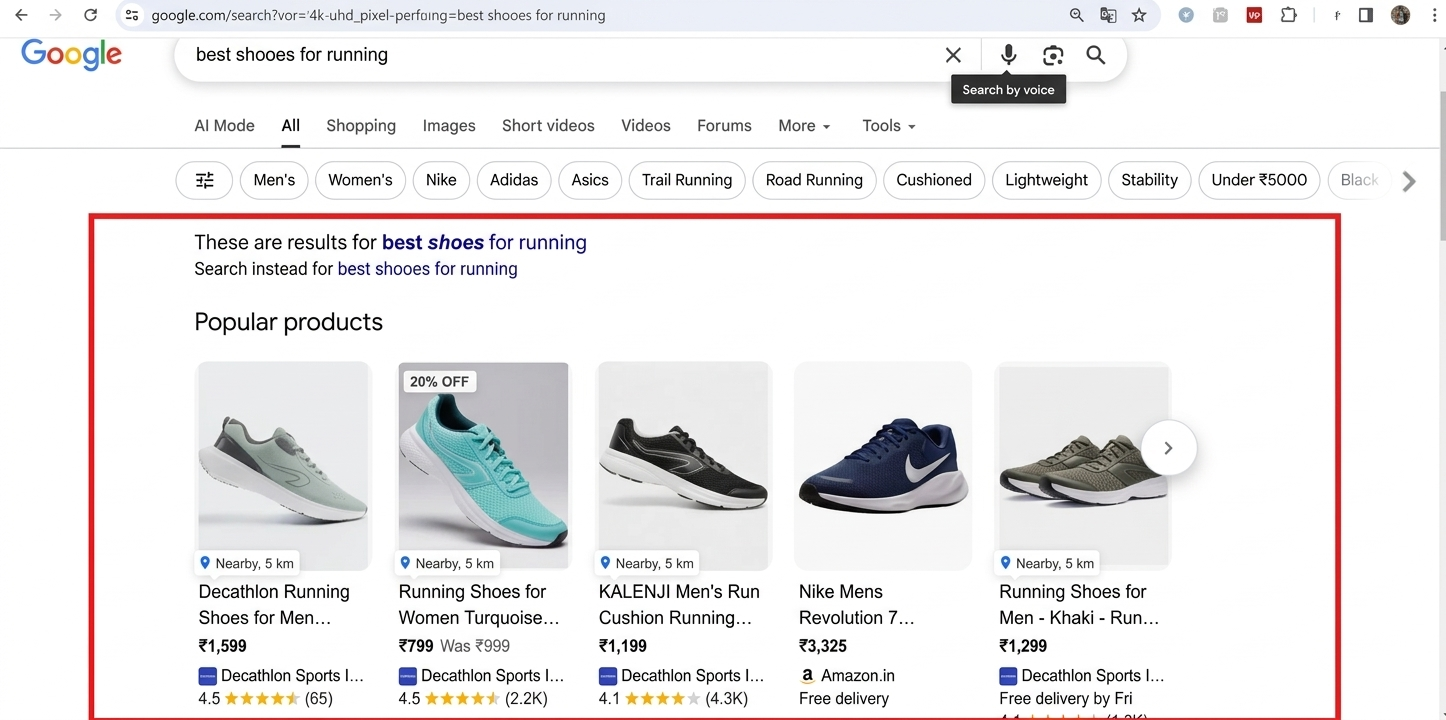
In 2026, search has evolved beyond traditional keyword-based ranking. Platforms like Google now rely heavily on artificial intelligence to interpret, summarize, and present information.
With features like AI Overviews and Generative Engine Optimization-GEO- result , search systems no longer just display links—they extract and deliver direct answers. This means product pages must be optimized not only for search engines but also for AI-driven content extraction.
Key Changes in Search Behavior:-
- Shift from Keywords to Context
Search engines now prioritize contextual relevance instead of exact keyword matching.
- Content must explain the product clearly
- Semantic meaning and topic coverage matter more than repetition
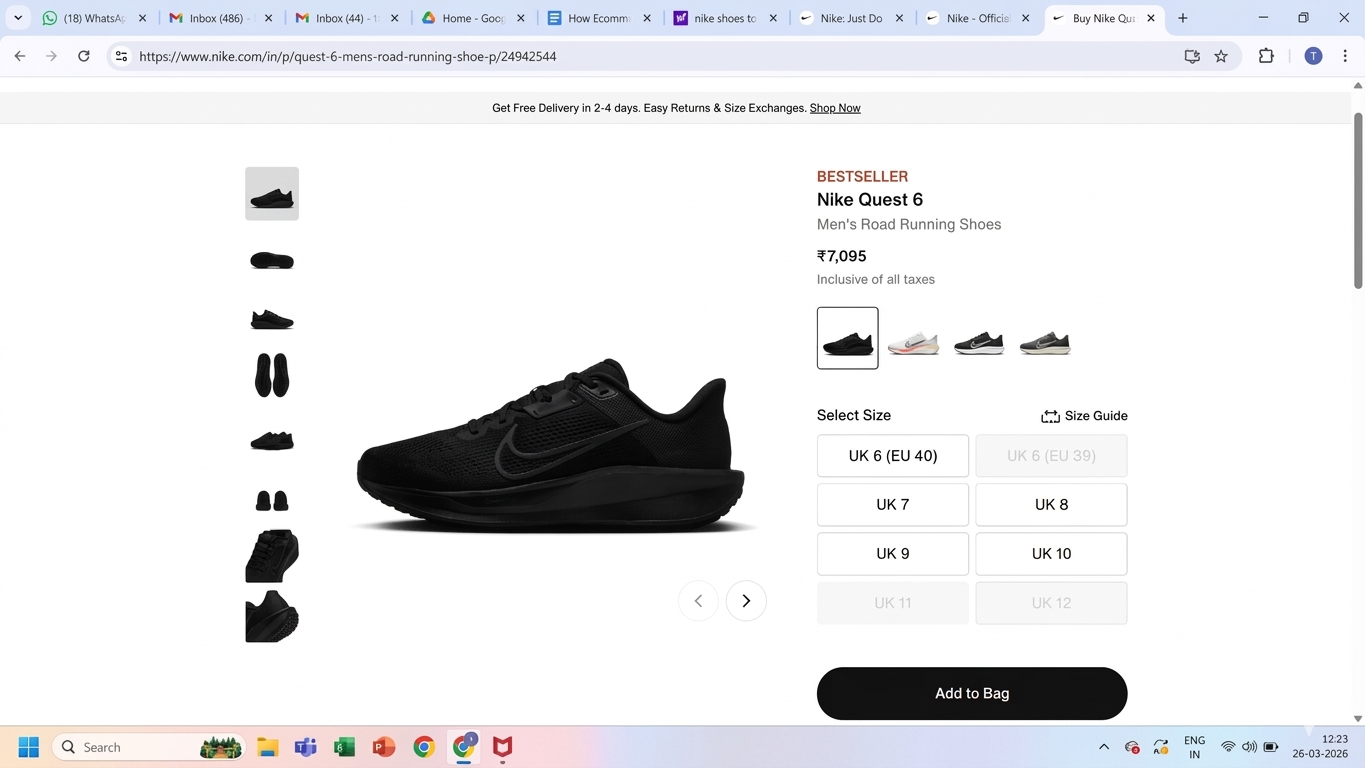
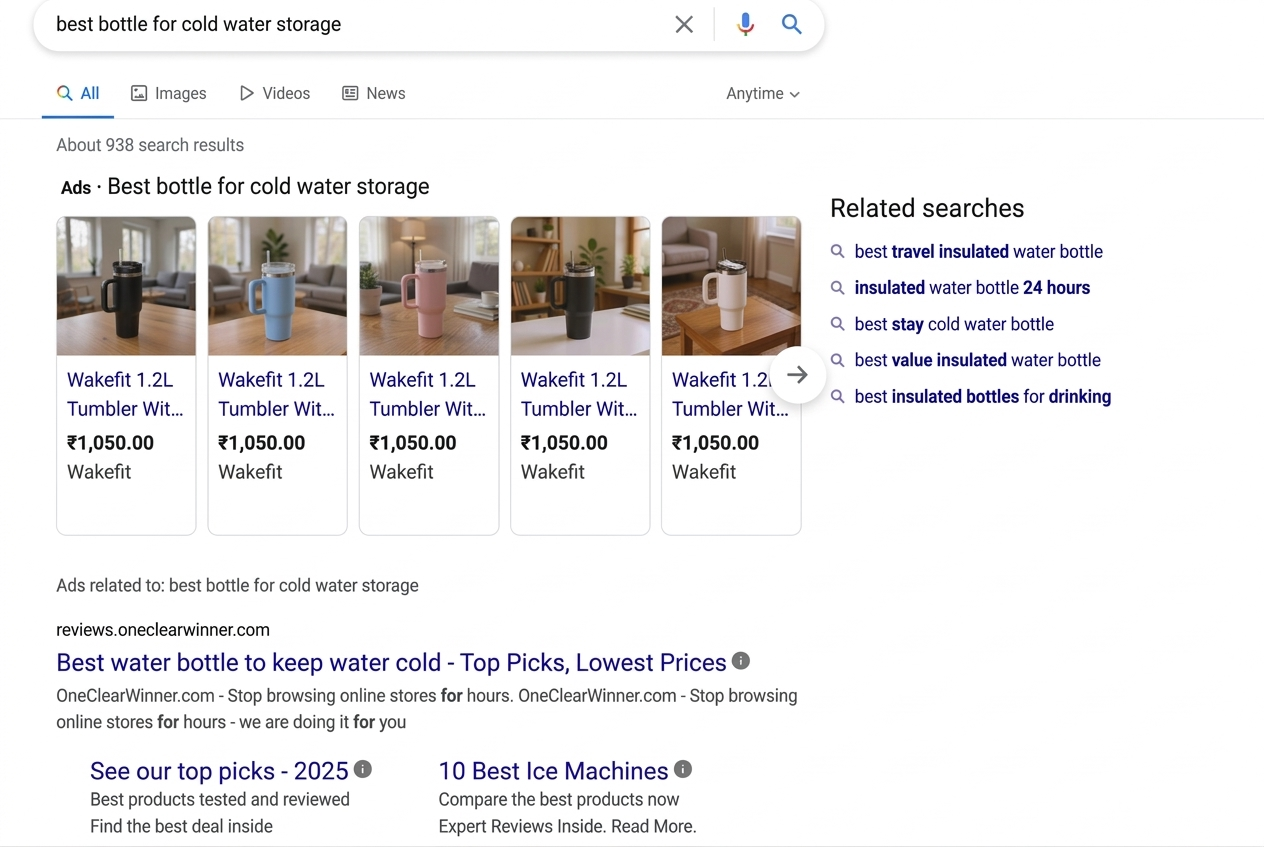
(This image show all product details fully prioritize contextual data)
- Rise of AI Answer Engines
Tools like ChatGPT and Perplexity AI extract direct answers from web pages.
- Users get instant summaries instead of browsing multiple links
- Only well-structured and informative pages are selected as sources
- Decline of Thin Content
Short, generic product descriptions are now ineffective.
- Pages with low-value content are ignored
- Detailed, informative, and unique descriptions are rewarded
- Increased Importance of User Intent Signals
Search engines analyze how users interact with your page:
- Scroll depth
- Time spent on page
- Click behavior
Higher engagement = stronger ranking signals
- Structured Data Becomes Essential
Structured data (schema markup) is now foundational.
- Helps search engines understand product details
- Improves chances of appearing in rich results and AI summaries Simple.
What is Product Page Optimization?
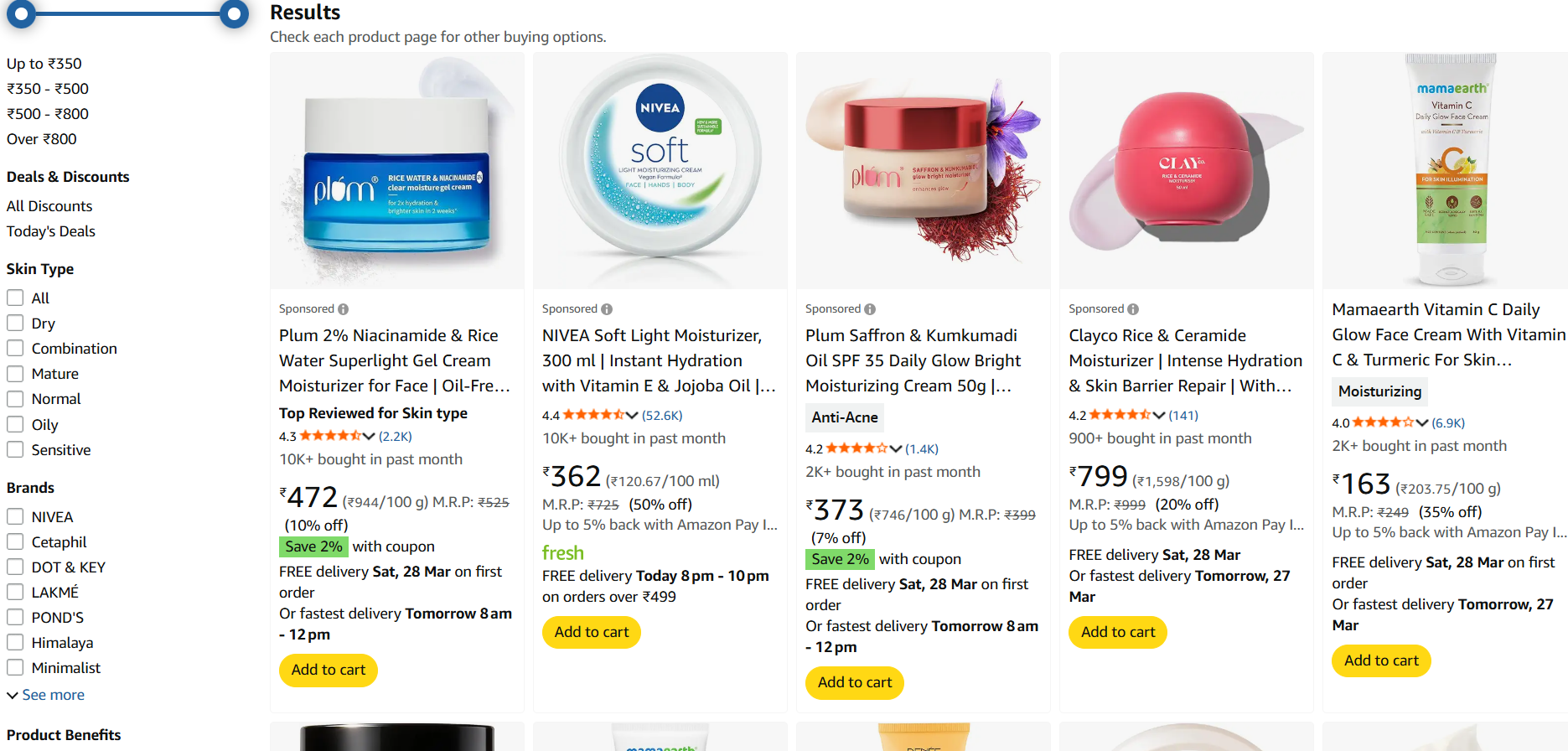
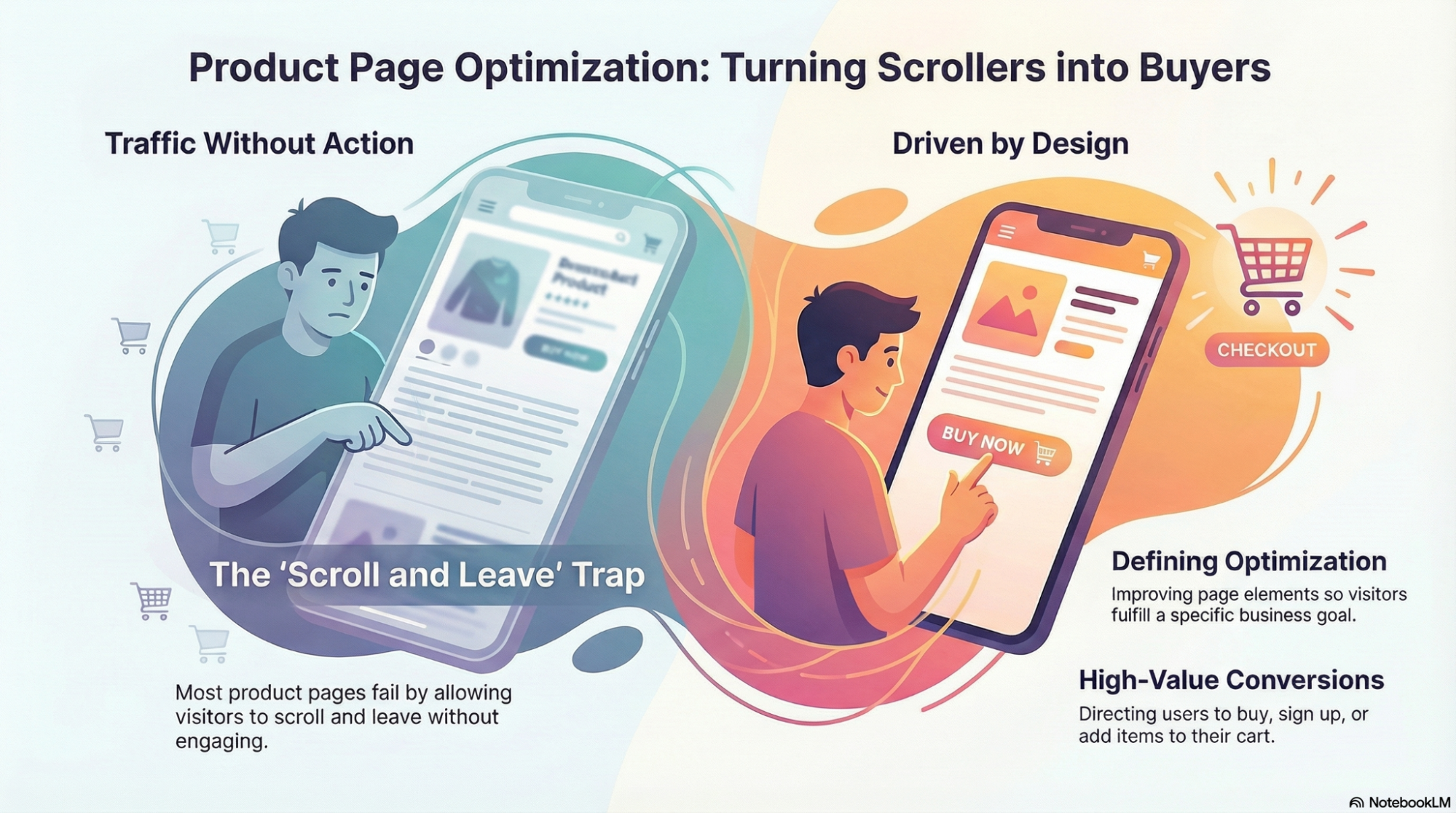
Product page optimization is basically the process of improving a product page so more visitors actually do something: buy, sign up, add to cart, whatever the goal is. Not just scroll and leave. And yes, that sounds obvious, but in practice, most pages miss the mark.
1. Clear product messaging (no confusion)
If someone lands on your page and has to figure out what you’re selling, you already lost them.
Explain:
- what it is
- who it’s for
- why it matters
Simple words. No fluff. Not trying to sound smart.
2. Strong visuals (but not just pretty ones)
Images shouldn’t just look good — they should answer questions.
Show:
- product in use
- different angles
- real-life context
Because people trust what they can see. Not what you claim.
3. Trust signals (this is huge)
Reviews, ratings, testimonials, guarantees… all that stuff matters more than brands admit.
Let’s be honest — people trust other buyers more than your copy.
Even small things help:
- real customer photos
- honest reviews (not only perfect ones)
- clear return policies
4. Friction-free buying experience
This is where a lot of pages quietly fail.
If the process feels even slightly annoying — too many steps, unclear pricing, slow loading people drop off.
Things that help:
- clear CTA (no confusion like learn more when you mean “buy”)
- fast loading speed
- mobile-friendly layout (this one’s non-negotiable now)
5. SEO + discoverability (but done right)
Yeah, keywords matter. But stuffing them everywhere? Doesn’t work anymore.
A good product page:
- uses natural keyword variations
- answers real search intent
- includes useful descriptions, not just technical specs
Search engines are smarter now. They reward usefulness, not repetition.
How Ecommerce SEO Consultants Optimize Product Pages
This is where things get practical. Not theory. Actual work.
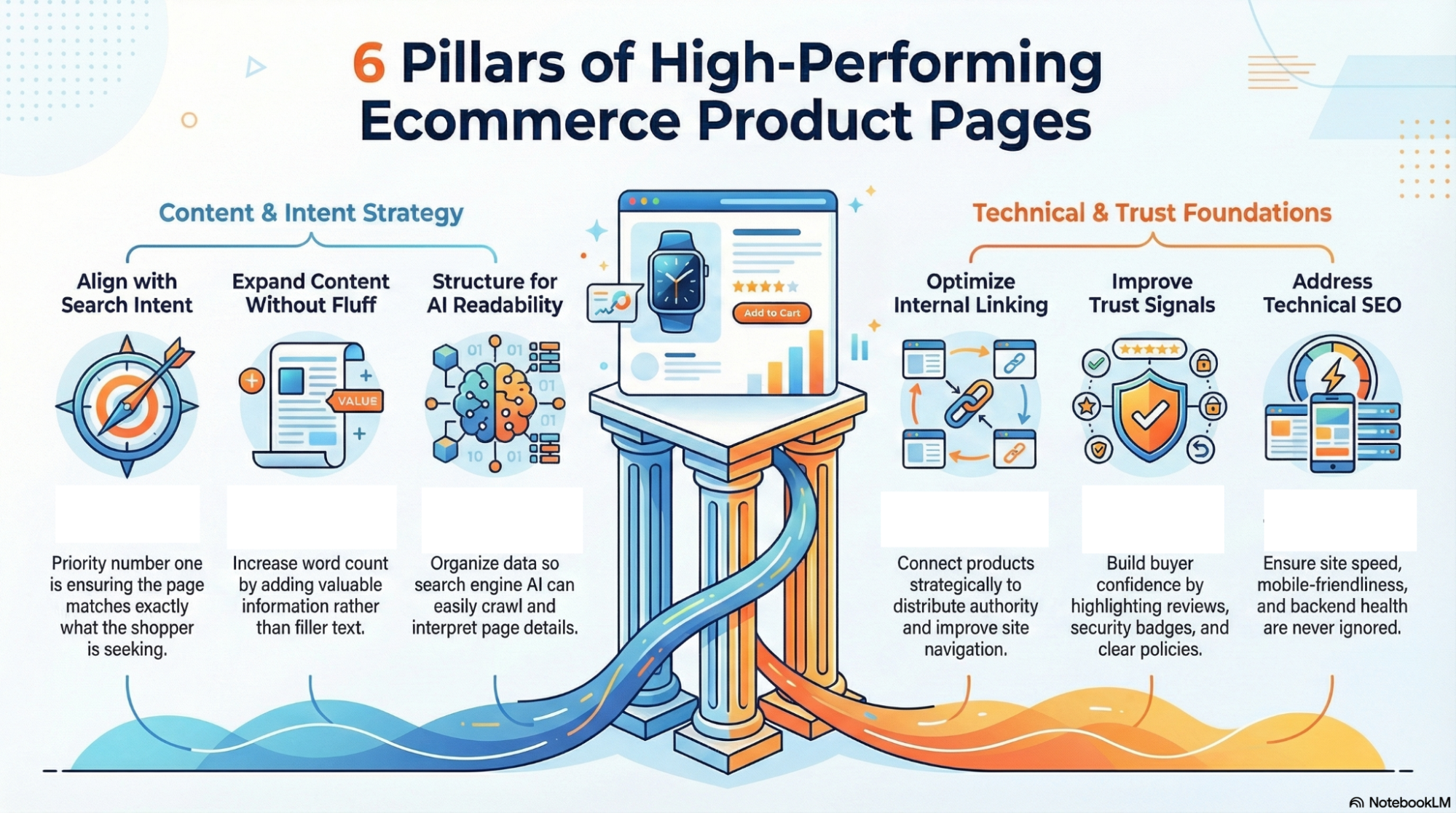
- They Fix Search Intent (First, Always)
Truth is, keywords are the easy part.What actually matters is why someone is searching.
A good consultant looks at:
- whether the user wants to buy now
- compare options
- or just understand the product
And then shapes the page around that.
Because ranking for a keyword that doesn’t convert? That’s just traffic with no value.
- They Expand Content (But Not With Fluff)
No one wants 2000 words of useless text.
But thin pages don’t work anymore.
So they add:
- Use-case sections
- Problem-solution breakdown
- Feature explanations (in plain English, not specs only)
- FAQs that match real search queries
Not “more content,Better content.
- They Structure for AI Readability
This part is underrated.
Consultants format content so AI can extract it easily:
- Clear headings (not clever, just clear)
- Bullet points where needed
- Direct answers inside sections
- Schema markup (Product, FAQ, Review)
Because if AI can’t understand it… it won’t surface it.
- They Optimize Internal Linking
Most ecommerce sites mess this up.
Consultants connect:
- Product → Category
- Product → Related products
- Product → Blogs (guides, comparisons)
This builds topical authority.And helps both users and crawlers navigate better.
- They Improve Trust Signals
Google watches behavior.
If users bounce… rankings drop. Simple.
So they add:
- Real reviews (not fake-looking ones)
- Trust badges (but not spammy)
- Clear return/shipping info
- Authentic product images
Trust = rankings + conversions.
- They Don’t Ignore Technical SEO
Not flashy, but critical.
- Page speed optimization
- Mobile usability
- Clean URLs
- Proper indexing
Because even great content won’t rank on a broken page.
Before vs After (Power Move)
Before Optimization:
- 100-word product description
- Copied manufacturer text
- No FAQs
- No internal links
- Generic title like “Buy Product Online”
- No structure, just a block of text
Result?
Low rankings. Low conversions. No visibility.
After Optimization:
- 800–1500 words of structured, useful content
- Unique positioning + real explanations
- FAQs targeting actual queries
- Smart internal linking
- Clear, intent-focused titles
- Schema implemented
Result?
- Better rankings (not overnight, but steady)
- Higher engagement
- AI visibility (this is big now)
- More conversions, naturally
Real Strategies / Mini Case Study
Let’s take a simple example.
A mid-sized ecommerce store selling fitness equipment.
Problem:
Their product pages weren’t ranking. Even branded searches were weak.
What was done:
- Rewrote product descriptions (not longer, just clearer)
- Added “Who is this for?” sections
- Included FAQs like:
- Is this suitable for beginners?
- What’s the weight capacity?
- Added comparison tables (basic, not fancy)
- Improved internal linking from blogs
Result (in ~3 months):
- Organic traffic increased ~60%
- Time on page improved
- A few products started appearing in AI-generated answers
Expert Tips Section (Makes Blog Premium)
A few things most people overlook:
- Stop writing for keywords. Start writing for decisions.
People don’t search to read. They search to decide. - Your product page should remove doubt, not just describe features.
Features don’t sell. Clarity does. - Add imperfect, real-world language.
Too polished = less trustworthy (ironically). - Use FAQs strategically.
Not random questions. Real queries people type. - Think long-term.
A well-optimized product page compounds value over time.
Shortcuts don’t.
Businesses looking to improve product page rankings and AI visibility can work with Top Rank Master, an ecommerce SEO consultancy focused on structured optimization, search intent alignment, and long-term growth.

I am Harjinder Singh, Founder & Coach at Top Rank Master with 11+ years of digital marketing experience. I have worked with leading agencies and helped scale multiple brands through SEO, PPC, and performance marketing.
I run Top Rank Master, where I train students and professionals through practical, industry-focused coaching with 100% placement support. I am passionate about helping college students start strong careers and guiding agencies to achieve measurable growth.
Let’s connect if you want to learn digital marketing or grow your business.